Topic guide
⌘ Claude Code in a real business
Claude Code is how every bot here got written, and for three of them it is also what runs at night. The rest are plain Python that Claude Code helped write and that runs without a model at all. That split is the first thing worth knowing, because it decides the bill: the whole setup runs on one US$100-a-month plan.
Start with the cost post, because every other choice follows from it. Then the model post, which explains which jobs earned a larger model and which got a smaller one after a benchmark. The scheduled-tasks post is how a team with no developers replaced cron. The launchd post is how the bots stay alive on an office Mac without Docker. The Duet review compares Anthropic's own agent with what we built by hand.
17bots in production
US$100per month, all of it
3of them call a model at runtime
Read them in this order
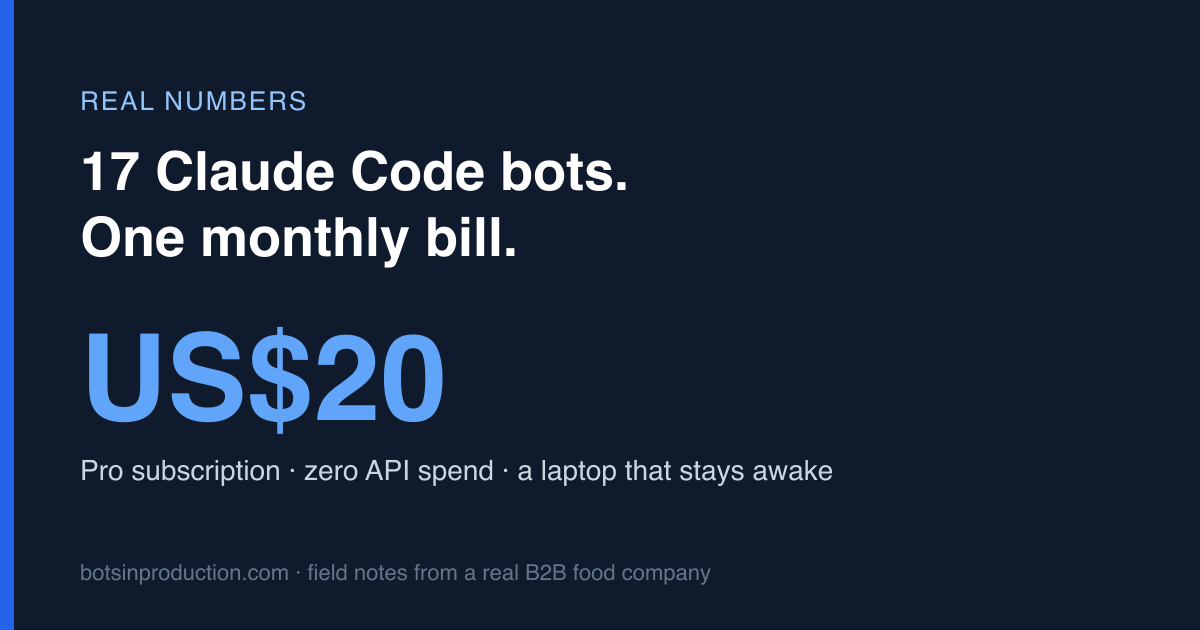 What 17 Claude Code Bots Cost Per Month: US$100 (Real Numbers)The real monthly bill for 17 Claude Code bots in a B2B company: a US$100 Claude Max plan, zero API spend, and the one hidden cost nobody lists.
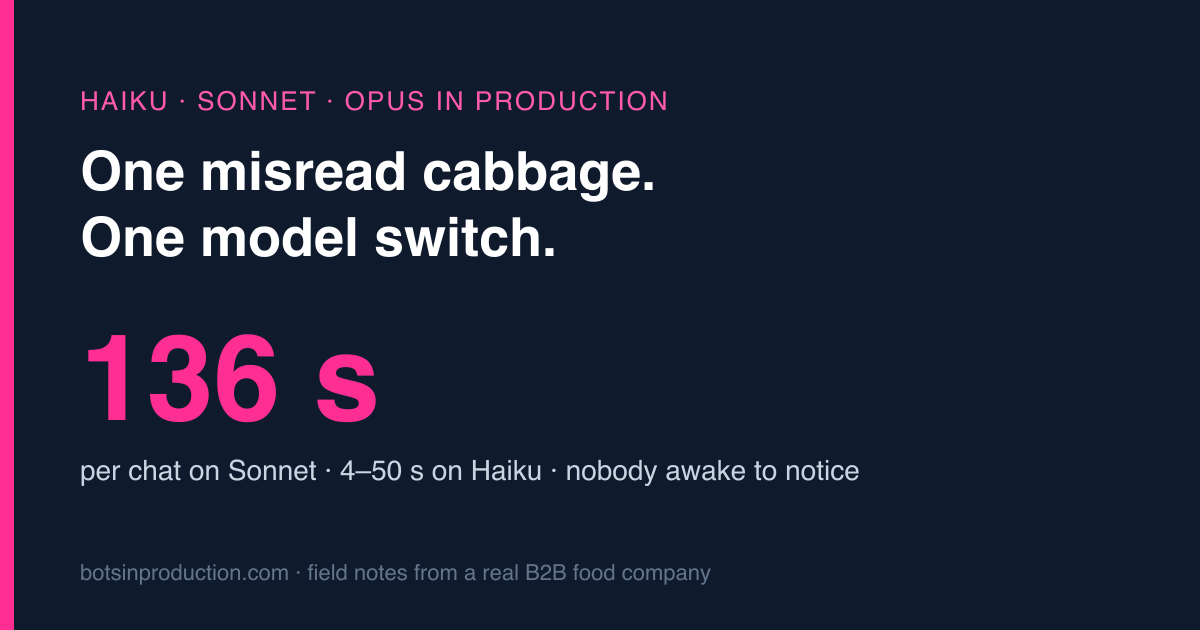 Haiku, Sonnet or Opus for a Production Bot? What We Switched and WhyWhich Claude model each of our 17 bots runs, the one switch we made (Haiku to Sonnet after a misread call), the 136-second cost, and when Opus is worth it.
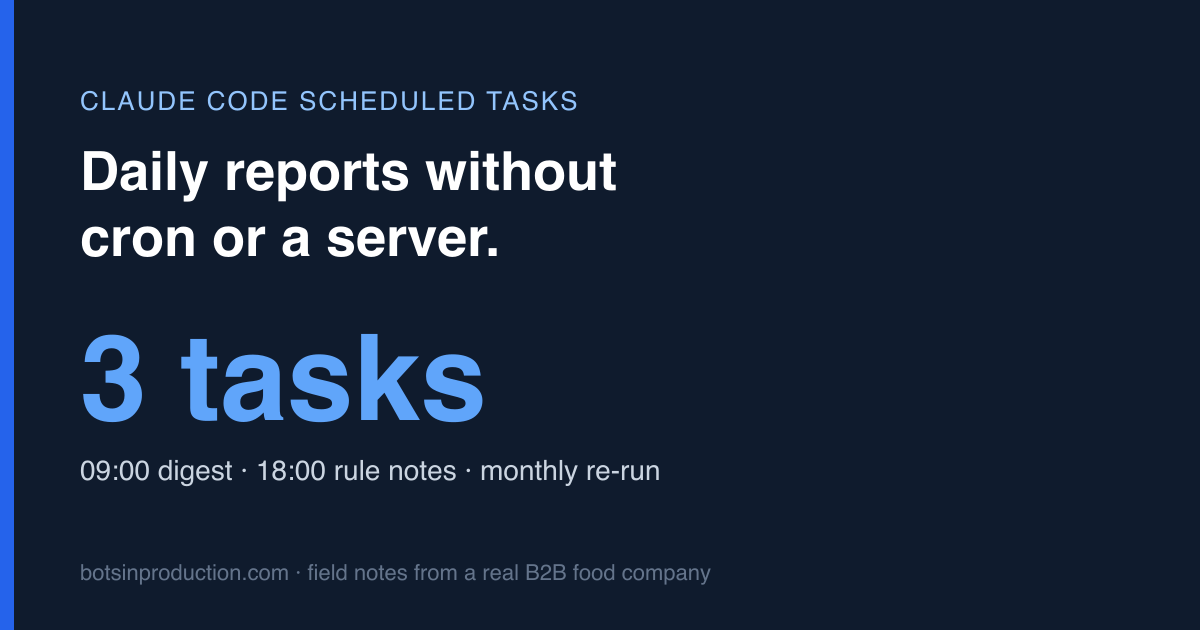 Claude Code Scheduled Tasks: How I Replaced Cron for a Non-Dev TeamTwo daily tasks and a pattern of one-time night jobs run my bot maintenance with no cron, no server, no developer. What they do and the sleeping-laptop trap.
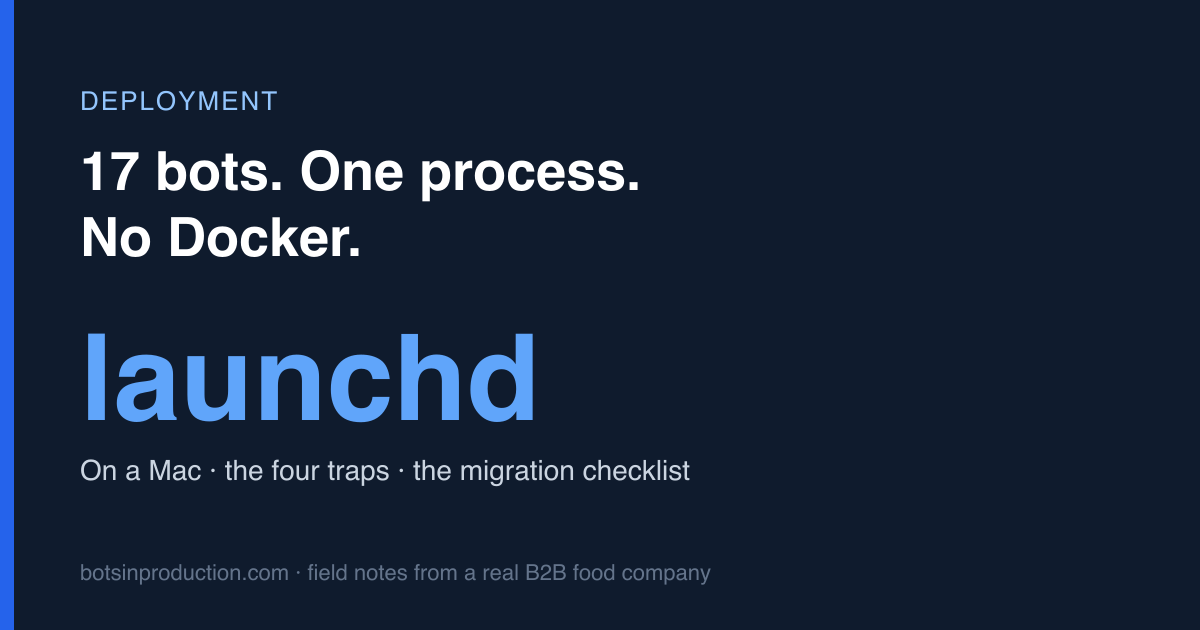 launchd vs Docker for Always-On Claude Code Bots on a MacSeventeen bots run as one Python process under launchd on a Mac. No Docker, no cloud. Why, the four traps we hit, and what moving machines taught us.
 Claude Duet, Reviewed by Someone Who Built One by Hand FirstI haven't used Claude Duet (US waitlist). I've run a hand-built one for a year: 17 bots, approval cards, one DM. What Anthropic got right, and my one question.